Wireless phone chargers operate using electromagnetic induction, transferring electrical energy between a transmitter coil in the charging pad and a receiver coil in the phone without physical contact. This technology, primarily governed by the Qi standard, allows for convenient, cable-free power delivery, with modern chargers offering speeds up to 15W or more. For instance, Apple’s MagSafe and the newer Qi2 standard incorporate magnetic alignment for optimized power transfer and faster charging, particularly for compatible iPhones and future devices.
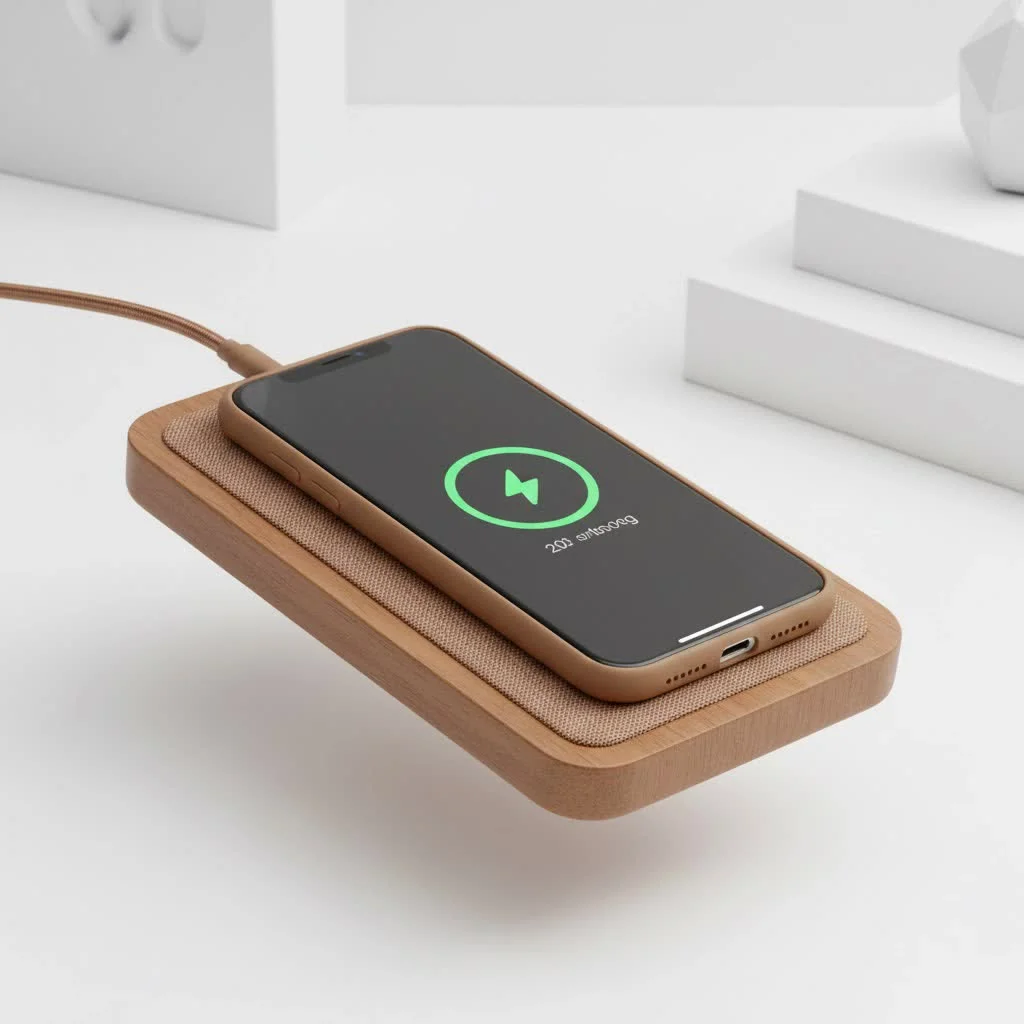
How Does Wireless Phone Charging Actually Work?
At its core, a wireless phone charger might feel like magic, but it’s pure science: electromagnetic induction. This ingenious principle allows electrical energy to transfer between two objects without any physical connection. For shop curated wireless chargers on this site.
A wireless charging pad contains a coil of wires—the transmitter coil—that creates an oscillating magnetic field when plugged into power. Your smartphone, if it supports wireless charging, has a similar coil—the receiver coil—embedded in its back. When your phone is placed on the charging pad, the magnetic field from the pad induces an electric current in your phone’s receiver coil. This current is then converted into direct current (DC) by your phone’s internal circuitry, charging its battery. It’s like an invisible bridge of energy, making your wireless phone charger a truly remarkable piece of tech.
The Wireless Charging Landscape: Qi, MagSafe, and Beyond
The world of wireless phone chargers has evolved significantly, with different standards offering various levels of compatibility and performance. Understanding these can help you choose the best wireless phone charger for your needs.
Qi: The Universal Standard
Qi (pronounced “chee”) is the most widely adopted wireless charging standard, developed by the Wireless Power Consortium (WPC). It ensures broad interoperability, meaning a Qi-compatible phone can typically charge on any Qi-certified pad, regardless of brand. Most Android phones and iPhones (from iPhone 8 onwards) support Qi charging. While early Qi chargers offered speeds around 5W-7.5W, many modern Qi wireless phone chargers now support up to 15W, providing a respectable charging pace.
MagSafe: Apple’s Magnetic Advantage
Introduced with the iPhone 12, MagSafe is Apple’s proprietary magnetic charging system. While it’s built upon the foundational Qi technology, MagSafe adds a ring of magnets around the charging coil. This magnetic alignment ensures your iPhone snaps perfectly into place on the charger, optimizing power transfer and preventing accidental disconnections. MagSafe wireless phone chargers can deliver up to 15W for most compatible iPhones, and up to 25W for newer iPhone models, offering faster charging compared to older basic Qi pads. Beyond just charging, MagSafe also enables an ecosystem of magnetic accessories.
Qi2: The Future of Universal Magnetic Charging
|
Our Picks for the Best Wireless Charger in 2026
As an Amazon Associate I earn from qualifying purchases.
|
||
| Num | Product | Action |
|---|---|---|
| 1 | Magnetic Wireless Charger 15W Mag Safe Charger-Fast Charging Pad Compatible with iPhone17/16/15/14/13/12 Series & Airpods 2 3 Pro-LED Mag-Safe Pad with Dual Charging Ports Original Replacement(White) |

|
| 2 | Amazon Basics 15W Qi Certified Wireless Charging Pad for iPhone 16/15/14/13/12/11/X, Samsung and More, with USB Cable, Black |
|
| 3 | [Apple MFi Certified]Magnetic Wireless Charger Apple Mag Safe Charger,15W 6FT Fast Wireless Charging Pad for Apple iPhone 16 Pro Max/16 Pro/16 Plus/15 Pro Max/14/13/12/AirPods3/2/Pro/Pro2,Charging Pad |
|
| 4 | Magnetic Wireless Charger 15W Fast Mag Safe Charger for Cell iPhone 17 Pro Max/17 Pro/17 Air/17/16/15/14/13/12 Series 2 Pack Charging Pad for AirPods 3/2/Pro 2/Pro Mag-Safe Original Replacement |
|
| 5 | NeverFall Car Phone Holder for MagSafe [78+LBS Ultra Grip - 2400gf Magnetic Power] 360° Foldable Car Mount Cell Phone Holders for Your Car for iPhone 17-12 and All Smartphones, Carbon Fiber |
|
| 6 | Samsung 15W Wireless Charger Single, Cordless Super Fast Charging Pad for Galaxy Phones and Devices, Compact Design, LED Indicator, USB C Cable Included, 2022, US Version, Grey |
|
| 7 | Wireless Charger Samsung Fast Charging Pad for Samsung Galaxy S25 Ultra/S24 FE/S23 Ultra/S22/S21/Z Flip 6 5,15W Wireless Charging Station Charger Mat and QC Adapter for Google Pixel 9 8a 7a 8 7 Pro |
|
| 8 | LỖI |
|
| 9 | INIU Wireless Charger, 15W Fast Qi Certified Wireless Charging Station with Sleep-Friendly Adaptive Light Compatible with iPhone 17 16 15 14 13 12 Pro Max Samsung Galaxy S25 S24 S23 Note 20 Google etc |
|
| 10 | [Apple MFi Certified]Magnetic Wireless iPhone Charger Magsafe Charger,6FT 15W Fast Phone Charging Pad Wireless Magnetic Charge for iPhone 17/17Air/16 Pro Max/16 Plus/15 Pro Max/14/13/12/AirPods3/2/Pro |
|
Taking inspiration from MagSafe’s success, the Wireless Power Consortium introduced Qi2. This updated universal standard integrates magnetic alignment, bringing the benefits of secure, optimized placement to a broader range of devices. Qi2 wireless phone chargers promise better efficiency and charging speeds, typically up to 15W, for compatible devices, including iPhone 15 and future models from various brands. It essentially bridges the gap between Apple’s proprietary system and the universal Qi standard, enhancing the overall user experience.
Why Embrace Wireless Charging? The Benefits
Beyond the ‘cool factor,’ choosing a wireless phone charger offers several tangible advantages that enhance convenience and protect your devices.
- Ultimate Convenience: No more fumbling with cables in the dark or struggling with tiny connectors. Simply place your phone on the pad, and charging begins. It’s perfect for quick top-ups throughout the day.
- Reduced Wear and Tear: Constantly plugging and unplugging cables can stress your phone’s charging port, leading to damage over time. Wireless charging eliminates this, preserving the longevity of your device’s port.
- Clutter-Free Spaces: Say goodbye to messy cables on your desk, nightstand, or kitchen counter. A wireless phone charger helps maintain a clean, organized environment.
- Enhanced Safety Features: Reputable wireless chargers, especially Qi-certified models, come equipped with safety mechanisms like Foreign Object Detection (FOD), which prevents charging if metal objects (like keys or coins) are on the pad. They also include overcharge protection to safeguard your battery.
Common Wireless Charging Headaches and How to Fix Them
Even the most advanced technology can encounter a hiccup or two. Here are some common issues you might face with your wireless phone charger and how to resolve them like a pro.
“My Phone Isn’t Charging!” – Alignment is Key
Have you ever placed your phone on the pad, walked away, and returned to find it hasn’t charged? Misalignment is often the culprit.Solution: Ensure your phone is centered precisely on the charging pad. The charging coils in both the charger and your phone need to align for efficient power transfer. Many chargers have an indicator light or an on-screen notification on your phone to confirm a proper connection. For multi-device chargers, look for specific placement guides.
“Is My Phone Case to Blame?” – Case Compatibility
While many slim phone cases work seamlessly, some can be a roadblock to wireless charging.Solution: Thick cases (over 3-4mm), those with metal elements, or wallet cases that store credit cards can interfere with the electromagnetic field. Try removing your phone case and re-placing it on the wireless phone charger. If it charges without the case, you’ve found your issue. Opt for thinner, non-metallic, or MagSafe-compatible cases for the best experience.
“Why Is It So Slow?” – Power & Wattage Matters
Wireless charging speeds can vary significantly depending on your charger and phone’s capabilities.Solution: Check the wattage of your wireless phone charger and its accompanying power adapter. Many phones, especially newer models, require a higher wattage (e.g., 10W, 15W, or even 25W for MagSafe) and a compatible Quick Charge (QC) or Power Delivery (PD) adapter to achieve optimal speeds. Using a low-wattage adapter or a non-certified charger can result in slow or inconsistent charging. Always use the adapter that came with your charger or one recommended by the manufacturer.
“Is It Overheating?” – Heat Management
Some warmth during wireless charging is normal, but excessive heat can indicate a problem.Solution: Overheating can occur due to foreign objects on the pad, poor alignment, or using a low-quality, non-certified wireless phone charger. Ensure the charging area is clear of debris. If your phone or charger feels excessively hot, immediately remove the phone and unplug the charger. Always choose Qi-certified products that include over-temperature protection for peace of mind.
Software Glitches and Faulty Hardware
Sometimes the issue isn’t with how you’re using it, but with the tech itself.Solution: A quick restart of your phone can often resolve minor software bugs interfering with charging. Also, check for any available software updates for your device, as manufacturers frequently release patches for charging-related issues. If the problem persists, inspect your wireless phone charger and its cable for any visible damage. A frayed cable or a faulty adapter can prevent power delivery. If you suspect hardware damage, it’s best to replace the component with a certified alternative.
Expert Tips for Optimal Wireless Charging
As a hub for modern wireless power solutions, Rbxyz.com is committed to helping you get the most out of your devices. Here are our top expert tips to ensure a smooth, safe, and efficient wireless charging experience:
- Always Go Certified: Prioritize Qi-certified (or MagSafe-certified for Apple users) wireless phone chargers. These products meet stringent safety and performance standards, minimizing risks of damage or overheating.
- Clear the Deck: Keep your charging pad and phone’s back free from any foreign objects, dust, or debris. Even small metallic items like coins can trigger Foreign Object Detection or cause unnecessary heat.
- Match Wattage for Speed: To get the fastest possible wireless charge, ensure your charger’s wattage output is compatible with your phone’s maximum wireless charging input. Don’t expect 15W charging from a 5W pad!
- Mind Your Cases: While many thin cases are fine, consistently remove thick, metallic, or magnet-backed cases (unless specifically designed with MagSafe/Qi2) when charging.
- Overnight Charging is Generally Safe: Modern smartphones and certified wireless phone chargers have built-in safeguards to prevent overcharging. Once your phone reaches 100%, the charger typically enters a trickle charge or stops transmitting power, preserving battery health.
- Unplug if Not in Use (for older/cheaper models): While modern, high-quality chargers are designed to be left plugged in, for older or cheaper models, unplugging them when not in use can prevent unnecessary heat generation and prolong their lifespan.
“The beauty of wireless charging isn’t just convenience; it’s about intelligent power delivery. By choosing certified products and understanding the simple mechanics, users unlock a truly effortless and safe charging experience that integrates perfectly into their modern lives,” says Dr. Lena Khan, Lead Wireless Power Engineer at Rbxyz Labs.
Frequently Asked Questions
Is wireless charging bad for my phone’s battery?
No, modern wireless phone chargers and smartphones are designed with advanced battery management systems that prevent overcharging and minimize heat, ensuring the longevity of your phone’s battery. Some controlled, slower wireless charging can even be gentler on your battery than rapid wired charging.
Can I use any wireless charger with any phone?
Generally, yes, if both your phone and the wireless phone charger adhere to the Qi standard. However, for optimal speeds and features (like magnetic alignment), it’s best to use chargers compatible with your specific device’s capabilities (e.g., MagSafe for iPhones 12+, Qi2 for newer devices).
How much faster is wired charging?
Wired charging, especially with fast charging protocols like USB-PD, often remains faster than wireless charging. While premium wireless chargers (like MagSafe or Qi2) can deliver up to 15W or even 25W, wired connections can sometimes reach 60W, 100W, or more, significantly reducing charging times.
What’s the difference between Qi and MagSafe?
Qi is the universal inductive wireless charging standard, supported by most smartphones. MagSafe is Apple’s proprietary system, based on Qi, but adds magnetic alignment for secure attachment and optimized charging speeds specifically for iPhones (12 and newer). Qi2 is the latest universal standard that incorporates magnetic alignment, inspired by MagSafe, to bring similar benefits to a wider range of devices.
Does wireless charging work through thick cases?
Wireless charging typically works through thin, non-metallic phone cases (up to 3-4mm thick). However, thicker cases, especially those made of metal or containing magnetic strips (unless they are MagSafe or Qi2 compatible), can block or significantly impede the wireless power transfer, preventing your phone from charging effectively.
Embrace the Future of Power with Rbxyz
Wireless phone chargers have transformed how we power our devices, offering unparalleled convenience and a cleaner aesthetic. By understanding the underlying technology, adhering to best practices, and troubleshooting common issues, you can unlock the full potential of this incredible innovation. At Rbxyz.com, we are dedicated to bringing you the most reliable, expert-driven insights into the world of wireless power. Choose quality, charge smart, and enjoy the freedom that a truly effective wireless phone charger provides. Explore more expert guides and product recommendations on Rbxyz.com today!
Frequently Asked Questions
Is wireless charging detrimental to my phone's battery health?
No, modern wireless phone chargers and smartphones incorporate advanced battery management systems to prevent overcharging and minimize heat. These systems ensure the longevity of your phone's battery, with some slower wireless charging methods potentially being gentler than rapid wired charging.
Can any wireless charger be used with any smartphone?
Generally, yes, if both your phone and the wireless phone charger adhere to the universal Qi standard. However, for optimal speeds and features like magnetic alignment, it is best to use chargers compatible with your device's specific capabilities, such as MagSafe for iPhones 12+ or Qi2 for newer models.
How do wired charging speeds compare to wireless charging speeds?
Wired charging, especially with fast charging protocols like USB-PD, is often significantly faster than wireless charging. While premium wireless chargers (MagSafe or Qi2) can deliver up to 15W or 25W, wired connections can reach 60W, 100W, or more, drastically reducing charging times.
What are the key differences between Qi and MagSafe wireless charging?
Qi is the universal inductive wireless charging standard supported by most smartphones. MagSafe is Apple's proprietary system, built on Qi, but adds magnetic alignment for secure attachment and optimized charging speeds specifically for iPhones (12 and newer). Qi2 is the latest universal standard that integrates magnetic alignment, inspired by MagSafe, to bring similar benefits to a wider range of devices.
Will wireless charging function effectively through thick phone cases?
Wireless charging typically works through thin, non-metallic phone cases up to 3-4mm thick. However, thicker cases, especially those made of metal or containing magnetic strips (unless they are MagSafe or Qi2 compatible), can block or significantly impede wireless power transfer, preventing effective charging.
Troubleshoot Common Wireless Charging Issues
Resolve common problems like slow charging, overheating, or non-charging with your wireless phone charger.
Ensure your phone is centered precisely on the charging pad. The charging coils in both the charger and your phone must align for efficient power transfer. Look for an indicator light or on-screen notification to confirm a proper connection.
Remove thick cases (over 3-4mm), those with metal elements, or wallet cases that store credit cards. These can interfere with the electromagnetic field. If your phone charges without the case, opt for thinner, non-metallic, or MagSafe-compatible cases.
Check the wattage of your wireless phone charger and its power adapter. Many phones require higher wattage (e.g., 10W, 15W, or 25W for MagSafe) and a compatible Quick Charge (QC) or Power Delivery (PD) adapter for optimal speeds. Using a low-wattage adapter can result in slow charging.
Ensure the charging area is clear of foreign objects, dust, or debris. Excessive heat can indicate a problem; if your phone or charger feels excessively hot, immediately remove the phone and unplug the charger. Always choose Qi-certified products with over-temperature protection.
Restart your phone to resolve minor software bugs and check for available software updates. Inspect your wireless phone charger and its cable for any visible damage. A frayed cable or faulty adapter can prevent power delivery, requiring replacement with a certified alternative.
Get our weekly buyer guide
Practical specs, not advice. Unsubscribe anytime.
I was always skeptical about wireless charging, but after reading about the Qi standard and how it works, I decided to try it. I got a 15W charger, and it’s been fantastic! My phone charges so much faster than I expected, and it’s incredibly convenient not having to fiddle with cables anymore. Definitely a game-changer for my nightstand.
I picked up a new wireless charger, hoping to get rid of some cable clutter. While the convenience is nice, I’m a bit disappointed with the charging speed. It says it’s 10W, but it feels slower than my old wired charger. Maybe I need to look into one with MagSafe or Qi2 for my iPhone to get that faster alignment and power transfer.
I love the idea of electromagnetic induction for charging. It’s so cool how it works without any physical contact. I bought a charger for my desk, and it’s perfect for keeping my phone topped up throughout the day. My only minor complaint is that sometimes I have to adjust the phone a bit to get it to start charging, but once it’s aligned, it’s great.
Finally upgraded to a Qi2 compatible charger, and the difference is noticeable! The magnetic alignment is a huge plus, especially for my newer iPhone. No more waking up to a phone that didn’t charge because it shifted off the pad. The optimized power transfer really makes a difference in charging time too. Highly recommend going for Qi2 if your device supports it.