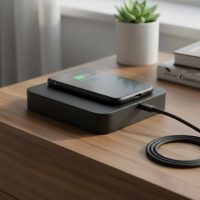
Imagine slipping into your car, placing your phone on a mount, and watching it power up automatically – no fumbling with cables, no searching for ports. That’s the magic of a wireless car charger, and it’s quickly becoming an essential accessory for any modern driver. In a world where our phones are central to navigation, communication, and entertainment, keeping them charged on the go is non-negotiable. A wireless car charger offers the ultimate convenience, transforming your vehicle’s interior into a clutter-free, efficient charging hub.
What is a Wireless Car Charger and How Does It Work?
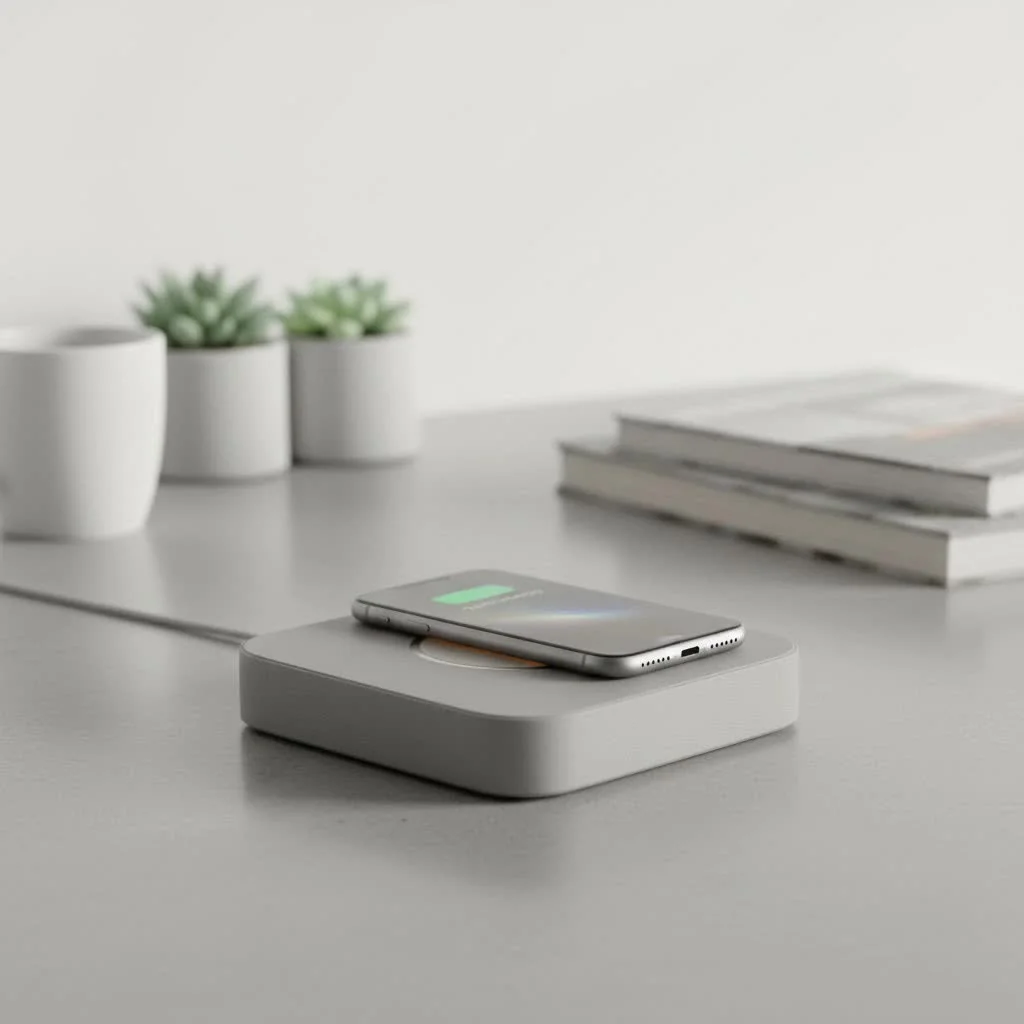
At its core, a wireless car charger is a device that charges your smartphone using electromagnetic induction, eliminating the need for a physical cable connection. Most modern wireless car chargers adhere to the Qi standard, which has become the global benchmark for wireless power. Inside the charger, there’s a transmitting coil, and in your compatible smartphone, there’s a receiving coil. When your phone is placed close enough to the charger, an electromagnetic field is created, inducing an electric current in your phone’s receiving coil, which then charges its battery. For complete wireless chargers library on this site.
This ingenious technology means you simply place your phone down, and it starts charging. It’s a game-changer for car interiors, keeping them neat and tidy, free from tangled cords that can be distracting or even hazardous while driving.
Why Choose a Wireless Car Charger? The Benefits You Can’t Ignore
Making the switch to a wireless car charger offers a wealth of advantages that go beyond just power. Once you experience the ease, it’s hard to go back.
First and foremost, a clutter-free cabin is a major win. Say goodbye to that mess of charging cables snaking across your dashboard or console. A wireless car charger creates a sleek, minimalist environment, enhancing both the look and feel of your car’s interior.
Then there’s the sheer convenience. There’s no need to plug and unplug a cable every time you get in or out of your car. Just place your phone on the mount, and it charges. Need to quickly grab your phone for a call or to check directions? Just pick it up. This “grab and go” functionality is incredibly practical for busy individuals.
Beyond aesthetics and ease, a wireless car charger also contributes to safer driving. When you’re not fumbling with a cable trying to plug in your phone, your eyes can stay on the road, reducing potential distractions. Many mounts also position your phone at an ideal viewing angle for GPS navigation, making it easier and safer to follow directions without taking your hands off the wheel.
Understanding the Different Types of Wireless Car Chargers
The market for wireless car chargers is diverse, offering various designs and functionalities to suit different preferences and vehicle types. Choosing the right one often comes down to how and where you want your phone mounted.
Mounting Styles: Finding Your Perfect Fit
|
Our Picks for the Best Wireless Charger in 2026
As an Amazon Associate I earn from qualifying purchases.
|
||
| Num | Product | Action |
|---|---|---|
| 1 | Magnetic Wireless Charger 15W Mag Safe Charger-Fast Charging Pad Compatible with iPhone17/16/15/14/13/12 Series & Airpods 2 3 Pro-LED Mag-Safe Pad with Dual Charging Ports Original Replacement(White) |

|
| 2 | [Apple MFi Certified]Magnetic Wireless iPhone Charger Magsafe Charger,6FT 15W Fast Phone Charging Pad Wireless Magnetic Charge for iPhone 17/17Air/16 Pro Max/16 Plus/15 Pro Max/14/13/12/AirPods3/2/Pro |
|
| 3 | [Apple MFi Certified]Magnetic Wireless Charger Apple Mag Safe Charger,15W 6FT Fast Wireless Charging Pad for Apple iPhone 16 Pro Max/16 Pro/16 Plus/15 Pro Max/14/13/12/AirPods3/2/Pro/Pro2,Charging Pad |
|
| 4 | Wireless Charger Samsung Fast Charging Pad for Samsung Galaxy S25 Ultra/S24 FE/S23 Ultra/S22/S21/Z Flip 6 5,15W Wireless Charging Station Charger Mat and QC Adapter for Google Pixel 9 8a 7a 8 7 Pro |
|
| 5 | INIU Wireless Charger, 15W Fast Qi Certified Wireless Charging Station with Sleep-Friendly Adaptive Light Compatible with iPhone 17 16 15 14 13 12 Pro Max Samsung Galaxy S25 S24 S23 Note 20 Google etc |
|
| 6 | Samsung 15W Wireless Charger Single, Cordless Super Fast Charging Pad for Galaxy Phones and Devices, Compact Design, LED Indicator, USB C Cable Included, 2022, US Version, Grey |
|
| 7 | Magnetic Wireless Charger 15W Fast Mag Safe Charger for Cell iPhone 17 Pro Max/17 Pro/17 Air/17/16/15/14/13/12 Series 2 Pack Charging Pad for AirPods 3/2/Pro 2/Pro Mag-Safe Original Replacement |
|
| 8 | Amazon Basics 15W Qi Certified Wireless Charging Pad for iPhone 16/15/14/13/12/11/X, Samsung and More, with USB Cable, Black |
|
| 9 | LỖI |
|
| 10 | NeverFall Car Phone Holder for MagSafe [78+LBS Ultra Grip - 2400gf Magnetic Power] 360° Foldable Car Mount Cell Phone Holders for Your Car for iPhone 17-12 and All Smartphones, Carbon Fiber |
|
The way your wireless car charger attaches to your vehicle is crucial for both stability and ergonomics.
- Dashboard/Windshield Mounts: These chargers typically use a strong suction cup to adhere to your dashboard or windshield. They offer excellent flexibility in positioning, allowing you to place your phone exactly where you want it. However, direct sunlight exposure can sometimes lead to overheating for both the charger and your phone, and the suction cup might lose its grip over time in extreme temperatures.
- Air Vent Mounts: Attaching to your car’s air conditioning vents, these are popular for their ability to keep your phone cool with direct airflow, especially during long navigation sessions. They also keep the dashboard clear. The main drawbacks can be blocking some airflow into the cabin or potentially putting stress on weaker vent slats.
- CD Slot Mounts: While less common in newer vehicles that often lack CD players, these mounts provide a highly stable and secure attachment point by slotting into the CD player. They offer a sturdy hold and can be a great option if your car has an unused CD slot, keeping your phone within easy reach without obstructing your view.
Magnetic vs. Auto-Clamping: What’s the Difference?
Beyond how they attach to your car, wireless car chargers also differ in how they secure your phone.
Magnetic wireless car chargers utilize powerful magnets to hold your phone in place. These are particularly popular with newer iPhones that feature Apple’s MagSafe technology, allowing for a perfect magnetic alignment and efficient charging. For Android phones or older iPhones, a compatible magnetic ring or case is usually required. The magnetic connection makes attaching and detaching your phone incredibly fast and satisfying.
Auto-clamping or gravity-sensing wireless car chargers feature motorized or gravity-actuated arms that automatically open to accept your phone and then close securely around it. This provides a firm grip, often without needing specific phone cases. While highly secure, the motorized versions require power to operate the clamps, and gravity models depend on the phone’s weight, which might not work for all phone sizes or orientations.
Charging Standards and Speed: Qi, MagSafe, and the Future of Qi2
Understanding the charging standards and power delivery is key to ensuring your wireless car charger meets your needs.
Qi: The Universal Standard
The Qi (pronounced “chee”) standard is the most widely adopted wireless charging technology. Most modern smartphones, regardless of brand, that support wireless charging are Qi-compatible. This universality means a Qi wireless car charger will likely work with a wide range of devices, offering convenient power without proprietary connectors.
MagSafe: Apple’s Magnetic Advantage
MagSafe is Apple’s proprietary magnetic technology, introduced with the iPhone 12 series. It uses a ring of magnets embedded in the iPhone to perfectly align with MagSafe-compatible chargers, ensuring optimal charging efficiency and a secure hold. While MagSafe chargers are primarily designed for iPhones, many third-party wireless car chargers offer “MagSafe compatible” features, often integrating magnets to work seamlessly with MagSafe iPhones.
Introducing Qi2: What You Need to Know
The latest evolution in wireless charging is Qi2. This new standard, based on Apple’s MagSafe technology, brings a Magnetic Power Profile (MPP) to the broader Qi ecosystem. Qi2 promises even faster charging speeds, improved energy efficiency, and a more reliable connection thanks to perfect alignment through magnets. For consumers, this means future wireless car chargers will offer an even better experience, combining the universal compatibility of Qi with the precision and performance of magnetic alignment. Expect to see Qi2 become a significant feature in new wireless car charger models, delivering power up to 15W, with some advanced chargers boasting outputs up to 25W.
Key Considerations Before Buying Your Next Wireless Car Charger
Choosing the perfect wireless car charger involves more than just picking the first one you see. Here’s what to keep in mind:
- Phone Compatibility: Does your phone support wireless charging? Is it Qi-compatible, MagSafe-compatible, or both? Ensure the charger you choose matches your device’s capabilities.
- Charging Speed: While “fast charging” is often advertised, actual speed depends on your phone’s maximum wireless input and the charger’s output. Look for chargers offering 7.5W (standard for iPhones), 10W, or 15W for optimal performance. Remember, your car’s power adapter also needs to deliver sufficient current.
- Mounting Stability: On bumpy roads, you need a charger that can securely hold your phone. Read reviews about suction cup strength, vent clip rigidity, or magnetic hold.
- Case Thickness Impact: Thick phone cases can sometimes interfere with wireless charging. If you use a robust case, check if the charger is designed to work through thicker materials.
- Power Input Requirements: Most wireless car chargers need a powerful car adapter (often a QC 3.0 or PD port) to deliver their advertised charging speeds. Make sure your car has the right port, or consider buying a compatible car adapter.
Expert Insights: Maximizing Your Wireless Charging Experience
“The biggest mistake people make with wireless car chargers is not understanding the power ecosystem,” says Michael Chen, an automotive tech analyst at Rbxyz.com. “A 15W wireless charger is useless if your car’s USB port only provides 5W. Always invest in a quality car power adapter that can deliver enough juice to truly utilize your charger’s capabilities, especially if you’re using navigation and other power-intensive apps simultaneously. And consider a Qi2 charger for the best alignment and efficiency.”
Installation and Troubleshooting Tips for Your Wireless Car Charger
Installing a wireless car charger is usually straightforward. Simply attach the mount to your chosen location (dash, vent, or CD slot) and plug the charger’s cable into a compatible USB port or a 12V car adapter. Many modern cars have built-in USB ports, but a dedicated QC 3.0 or Power Delivery (PD) car charger adapter is often recommended for optimal speed.
If you encounter issues, here are some common troubleshooting tips:
- No Charge: Check if the charger is properly plugged into a powered port and if your car’s ignition is on. Ensure your phone is centered on the charging pad.
- Slow Charge: Verify your car’s power adapter is capable of providing enough wattage for your wireless car charger. Also, ensure your phone case isn’t too thick, as this can reduce efficiency.
- Overheating: This can sometimes happen during long charging sessions, especially with intense app usage or direct sunlight. Try repositioning the mount to a cooler spot, like an air vent, or reducing screen brightness.
- Phone Not Sticking (Magnetic): Ensure your phone or case has built-in MagSafe or a compatible metal ring for magnetic attraction.
Frequently Asked Questions
Are wireless car chargers bad for your phone battery?
No, reputable wireless car chargers are designed with safety features to prevent overcharging and overheating, which are detrimental to battery health. Modern smartphones also have advanced battery management systems.
Can I use a wireless car charger with a thick phone case?
It depends on the charger and the case. Most wireless car chargers can work through cases up to 3-5mm thick. Very thick, rugged, or metallic cases might interfere with charging efficiency or prevent it altogether.
How fast is a wireless car charger compared to a wired one?
Generally, wired charging (especially with fast charging standards like USB-PD) is faster than wireless charging. However, a 15W wireless car charger can still provide a substantial power boost, often keeping pace with power-intensive tasks like GPS navigation.
Do all phones support wireless charging?
No. While it’s common in newer flagship and mid-range smartphones, not all phones support wireless charging. Check your phone’s specifications to confirm Qi compatibility.
What’s the best wattage for a wireless car charger?
For most modern smartphones, a wireless car charger offering 10W or 15W is ideal. iPhones typically charge wirelessly at up to 7.5W, while many Android phones can utilize 10W or 15W. Higher wattage generally means faster charging.
Drive Smarter, Charge Easier
The wireless car charger is more than just a gadget; it’s a statement about efficiency, convenience, and modern driving. By freeing your car from tangled cords and offering seamless power delivery, it simplifies your journey and enhances your focus on the road. Whether you’re a daily commuter, a road trip enthusiast, or just someone who appreciates a tidy car, a reliable wireless car charger is an investment that pays off every time you get behind the wheel. Embrace the future of in-car charging and experience the difference for yourself – your drive will thank you for it.
Get our weekly buyer guide
Practical specs, not advice. Unsubscribe anytime.