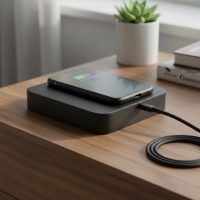
Tired of fumbling with tangled cables every time you get in your car? Imagine a world where your phone automatically starts charging the moment you place it in its mount, ready to power your navigation and music without a single cord. This isn’t science fiction; it’s the everyday convenience offered by a wireless phone charger for your car. For anyone looking to declutter their dashboard and streamline their charging routine, integrating a wireless car charger is a game-changer that combines convenience with cutting-edge technology.

Why a Wireless Phone Charger for Your Car is a Smart Upgrade
Making the switch to a wireless car charger brings a host of benefits that go beyond just charging your device. It’s about enhancing your driving experience and making your tech work smarter for you.
Unmatched Convenience and Safety
Picture this: you hop into your car, place your phone into its dedicated spot, and boom – it’s charging. No more plugging in a cable with one hand while trying to navigate traffic. This seamless process significantly reduces distractions, making your drive safer. Furthermore, for those quick stops, simply grab your phone and go, leaving the charger securely in place. It’s about maintaining focus on the road, where it truly matters.
Say Goodbye to Cable Clutter
If your car’s interior resembles a spaghetti junction of charging cables, you’re not alone. Wireless car chargers eliminate this mess entirely. By integrating the charging pad directly into a phone mount, you free up cup holders and dashboard space, giving your car a much cleaner, more organized look and feel. A tidy car interior can even contribute to a more relaxed driving experience.
Enhanced Phone Accessibility and Navigation
Many wireless car chargers double as robust phone mounts, ensuring your device is always at an optimal viewing angle for GPS navigation or hands-free calls. This combination means your phone is not only powered up but also perfectly positioned, removing the need for separate mounts and charging solutions. It’s a two-in-one solution that delivers maximum utility.
How Do Wireless Car Chargers Work? Understanding the Tech
The magic behind a wireless phone charger for car setups lies in electromagnetic induction, specifically utilizing the Qi (pronounced “chee”) wireless charging standard. This is the global standard for wireless power, adopted by most major smartphone manufacturers.
At its core, a wireless charger contains a transmitting coil, and your compatible smartphone has a receiving coil. When you place your phone onto the charger, an alternating current flows through the transmitting coil, creating an electromagnetic field. This field then induces an electrical current in your phone’s receiving coil, which in turn charges your battery. It’s a simple yet ingenious way to transfer power without physical contact.
Most modern smartphones, including recent iPhone models and many Android devices, are Qi-compatible. It’s always a good idea to double-check your phone’s specifications to ensure compatibility before purchasing a charger.
Choosing the Right Wireless Car Charger: What to Look For
With a myriad of options available, selecting the perfect wireless phone charger for your car can seem daunting. Here are the key factors to consider to ensure you make an informed decision that meets your specific needs.
Mounting Style: Find Your Perfect Spot
|
Our Picks for the Best Wireless Charger in 2026
As an Amazon Associate I earn from qualifying purchases.
|
||
| Num | Product | Action |
|---|---|---|
| 1 | Magnetic Wireless Charger 15W Fast Mag Safe Charger for Cell iPhone 17 Pro Max/17 Pro/17 Air/17/16/15/14/13/12 Series 2 Pack Charging Pad for AirPods 3/2/Pro 2/Pro Mag-Safe Original Replacement |

|
| 2 | [Apple MFi Certified]Magnetic Wireless Charger Apple Mag Safe Charger,15W 6FT Fast Wireless Charging Pad for Apple iPhone 16 Pro Max/16 Pro/16 Plus/15 Pro Max/14/13/12/AirPods3/2/Pro/Pro2,Charging Pad |
|
| 3 | Samsung 15W Wireless Charger Single, Cordless Super Fast Charging Pad for Galaxy Phones and Devices, Compact Design, LED Indicator, USB C Cable Included, 2022, US Version, Grey |
|
| 4 | INIU Wireless Charger, 15W Fast Qi Certified Wireless Charging Station with Sleep-Friendly Adaptive Light Compatible with iPhone 17 16 15 14 13 12 Pro Max Samsung Galaxy S25 S24 S23 Note 20 Google etc |
|
| 5 | LỖI |
|
| 6 | NeverFall Car Phone Holder for MagSafe [78+LBS Ultra Grip - 2400gf Magnetic Power] 360° Foldable Car Mount Cell Phone Holders for Your Car for iPhone 17-12 and All Smartphones, Carbon Fiber |
|
| 7 | [Apple MFi Certified]Magnetic Wireless iPhone Charger Magsafe Charger,6FT 15W Fast Phone Charging Pad Wireless Magnetic Charge for iPhone 17/17Air/16 Pro Max/16 Plus/15 Pro Max/14/13/12/AirPods3/2/Pro |
|
| 8 | Wireless Charger Samsung Fast Charging Pad for Samsung Galaxy S25 Ultra/S24 FE/S23 Ultra/S22/S21/Z Flip 6 5,15W Wireless Charging Station Charger Mat and QC Adapter for Google Pixel 9 8a 7a 8 7 Pro |
|
| 9 | Amazon Basics 15W Qi Certified Wireless Charging Pad for iPhone 16/15/14/13/12/11/X, Samsung and More, with USB Cable, Black |
|
| 10 | Magnetic Wireless Charger 15W Mag Safe Charger-Fast Charging Pad Compatible with iPhone17/16/15/14/13/12 Series & Airpods 2 3 Pro-LED Mag-Safe Pad with Dual Charging Ports Original Replacement(White) |
|
The way a charger mounts in your car is crucial for both convenience and safety.
- Vent Mounts: These clip onto your car’s air vents. They are popular for keeping the phone within easy view without obstructing the windshield. However, they might block airflow from your vents, which could be an issue in extreme weather.
- Dashboard Mounts: Utilizing strong adhesive, these mounts secure the charger directly to your dashboard. They offer excellent stability and versatility in placement but require a clean, flat surface for proper adhesion.
- Windshield Mounts: Typically use a suction cup to attach to your windshield. They offer broad visibility and easy access, but some drivers find them distracting or prefer not to have anything attached to their windshield.
- CD Slot Mounts: These slide into your car’s CD player slot, offering a sturdy and eye-level mounting solution without blocking vents or dashboard space. This is a great option if you rarely use your CD player.
- MagSafe Compatible Mounts: Specifically designed for newer iPhones with MagSafe technology, these mounts use magnets for a strong, precise, and effortless attachment. They offer the most seamless experience for compatible devices.
Charging Speed: Powering Up On the Go
Wireless charging speeds vary. Look for chargers that offer “fast wireless charging,” typically delivering 7.5W for iPhones and up to 15W for compatible Android devices. While wireless charging is generally slower than wired charging, a fast wireless car charger can still provide a significant power boost during your commute. Ensure the charger comes with a high-quality car adapter that can deliver enough power to the charging pad for optimal performance.
Device Compatibility: One Size Doesn’t Always Fit All
While most wireless chargers adhere to the Qi standard, specific features like MagSafe compatibility are exclusive to certain phone models. Also, consider the size of your phone, especially if you use a bulky case. Many car chargers have adjustable arms or grips that can accommodate various phone sizes and cases, but it’s important to verify this.
Build Quality and Design: Durability Meets Aesthetics
Your car charger will endure vibrations, temperature changes, and constant interaction. Opt for chargers made from durable materials that can withstand daily use. Aesthetically, choose a design that complements your car’s interior. Some chargers come with built-in cooling fans to prevent overheating, which is a valuable feature for extended use.
Expert Insight: “Wireless charging in your car isn’t just a gadget; it’s a commitment to a smoother, safer drive. The right charger integrates so seamlessly, you’ll wonder how you ever managed without it.” – Sarah Chen, Lead Product Engineer at ChargeFast Innovations.
Installation Tips for Your New Wireless Car Charger
Installing a wireless phone charger for your car is generally straightforward, but a few tips can ensure optimal performance and safety.
- Clean the Surface Thoroughly: If you opt for a dashboard or windshield mount, ensure the mounting surface is impeccably clean and dry. Residue can compromise adhesion, leading to a shaky or detached mount.
- Route Cables Safely: Even wireless chargers need a power cable from your car’s USB port or cigarette lighter adapter. Route this cable neatly along interior seams or under trim pieces to keep it out of the way, preventing tangles and potential driving hazards. Cable clips can be incredibly useful here.
- Position for Optimal View and Access: Before permanently securing your mount, test different positions. Ensure your phone is easily visible for navigation but doesn’t obstruct your view of the road or critical controls. It should also be easy to place and remove your phone.
- Test for Charging Effectiveness: Once installed, place your phone on the charger and verify that it starts charging immediately. Test with and without your phone case to ensure proper alignment and power transfer.
Troubleshooting Common Wireless Car Charger Issues
Even with the best wireless phone charger for your car, you might encounter a hiccup or two. Here’s how to tackle them:
-
Phone Not Charging:
- Check alignment: Ensure your phone is perfectly centered on the charging pad. Slight misalignments can prevent charging.
- Remove thick cases: Some thick phone cases, especially those with metal, magnets, or pop sockets, can interfere with wireless charging. Try removing the case.
- Verify power source: Ensure the car adapter is fully plugged in and receiving power. Test the USB port or cigarette lighter with another device to rule out a car power issue.
- Restart phone: Sometimes a simple phone restart can resolve minor software glitches affecting wireless charging.
-
Slow Charging:
- Use the right adapter: Ensure your car’s USB port or cigarette lighter adapter can deliver enough power (e.g., a QC 3.0 compatible adapter for fast charging). A low-power USB port will result in slow charging.
- Avoid extreme temperatures: Wireless charging efficiency can decrease in very hot or very cold conditions. If your phone feels excessively warm, charging might slow down as a protective measure.
- Close background apps: Many apps running in the background can consume power, making it seem like your phone is charging slowly.
-
Overheating Phone/Charger:
- This is often due to poor alignment or a thick case. Adjust phone position or remove the case.
- Ensure the charger isn’t exposed to direct sunlight for extended periods, especially on hot days.
- If your charger has a cooling fan, ensure it’s not blocked.
Frequently Asked Questions About Wireless Car Chargers
Q1: Is a wireless phone charger for a car as fast as a wired charger?
A1: Generally, wired charging is still faster, especially with modern fast-charging protocols. However, many wireless car chargers offer “fast wireless charging” at 7.5W (for iPhones) or 10-15W (for Android), which is sufficient for maintaining or boosting your phone’s battery during commutes.
Q2: Can I use a wireless car charger with my phone case on?
A2: Most wireless car chargers can accommodate slim to medium-thickness phone cases (up to 3-5mm). However, very thick cases, cases with metal plates, magnets, or pop sockets can interfere with the charging process.
Q3: Are wireless car chargers safe for my phone’s battery?
A3: Yes, reputable wireless car chargers are designed with safety features to prevent overcharging, overheating, and short-circuits, which protects your phone’s battery life. Always choose products from trusted brands.
Q4: Do all phones support wireless charging?
A4: No, not all phones support wireless charging. Most modern smartphones from major manufacturers (like recent iPhone models and many Android flagships) are Qi-compatible. Always check your phone’s specifications before purchasing a wireless charger.
Q5: Will a wireless car charger drain my car’s battery?
A5: A wireless car charger draws minimal power, similar to other small accessories. If your car’s power outlet (cigarette lighter or USB) turns off with the ignition, there’s no risk. If it’s always on, leaving the charger plugged in for extended periods in a parked car might cause a tiny drain, but it’s typically negligible.
Q6: What’s the difference between a standard wireless car charger and a MagSafe compatible one?
A6: Standard Qi wireless car chargers rely on precise alignment for charging. MagSafe compatible chargers, specifically designed for iPhones with MagSafe technology, use an array of magnets to automatically snap your phone into the perfect charging position, providing a more secure hold and consistent charging experience.
Drive Smarter with a Wireless Car Charger
Embracing a wireless phone charger for your car is about more than just convenience; it’s about upgrading your entire driving experience. From eliminating unsightly cable clutter to ensuring your navigation is always powered and within easy view, these devices offer a seamless blend of technology and practicality. By choosing the right mount, considering charging speed, and understanding compatibility, you can effortlessly integrate wireless charging into your daily commute. So, go ahead, ditch the cables, and enjoy a cleaner, safer, and more connected journey every time you hit the road.
Get our weekly buyer guide
Practical specs, not advice. Unsubscribe anytime.