An iPhone wireless charger provides a convenient way to power up your Apple device without cables, utilizing electromagnetic induction. Modern iPhones, specifically models from the iPhone 8 onwards, support Qi wireless charging, while iPhone 12 and newer models also feature MagSafe for faster, magnetically aligned charging up to 15W. This guide will help you understand how these devices work and choose the best charger for your needs.
What Exactly is iPhone Wireless Charging?
At its core, iPhone wireless charging relies on electromagnetic induction. An electric current in the charger’s coil creates an electromagnetic field. When your iPhone, with its receiver coil, is placed within this field, it induces an electric current in the phone’s coil, which then charges the battery. Most wireless chargers, including those for iPhone, adhere to the international Qi standard, ensuring broad compatibility.
MagSafe vs. Standard Qi: Understanding the Difference for Your iPhone
While all modern iPhones support Qi wireless charging, Apple introduced MagSafe with the iPhone 12 series. Understanding this distinction is crucial when selecting an iPhone wireless charger.
The Foundation: Qi Wireless Charging for iPhones
Every iPhone model from the iPhone 8, 8 Plus, and iPhone X onwards, including the latest iPhone 15 series, supports Qi wireless charging. This means you can use virtually any Qi-certified wireless charging pad or stand. For iPhones, standard Qi chargers typically deliver up to 7.5W of power, suitable for overnight charging or daily top-ups. It’s a reliable and widely available entry point into wireless charging.
Apple’s Innovation: MagSafe for iPhone
MagSafe enhances Qi wireless charging with magnets and smart communication. Introduced with the iPhone 12, MagSafe chargers use an array of magnets in both the iPhone and the charger to ensure perfect, secure alignment every time. Precise coil alignment is essential for efficient and faster wireless charging. MagSafe allows compatible iPhones (iPhone 12, 13, 14, 15 models, and their variants) to charge at up to 15W, which is twice the speed of standard Qi charging for iPhones.
A MagSafe charger is fundamentally a Qi charger. This means you can use a MagSafe charger with older Qi-compatible iPhones, but it will only deliver the standard 7.5W. The magnetic “snap” and the full 15W speed are exclusive to MagSafe-compatible iPhones.
Is Your iPhone Compatible with Wireless Charging?
To determine if your specific iPhone supports wireless charging, consider the following:
- Qi Wireless Charging: All iPhone models from the iPhone 8 and 8 Plus (released in 2017) onwards support Qi wireless charging. This includes the iPhone X, XR, XS, XS Max, iPhone 11 series, iPhone SE (2nd and 3rd generation), and every iPhone 12, 13, 14, and 15 model.
- MagSafe Wireless Charging: MagSafe’s full capabilities (magnetic alignment and 15W charging) are available for iPhone 12, iPhone 13, iPhone 14, and iPhone 15 models, along with their Pro, Pro Max, and Mini variants.
If you have an iPhone 7 or earlier, it does not have built-in wireless charging. However, third-party wireless charging receiver cases can enable this feature. When looking for an iPhone wireless charger, always verify compatibility with your specific iPhone model for optimal performance.
Choosing the Best iPhone Wireless Charger: Factors to Consider
To select the best iPhone wireless charger for your needs, consider these key factors:
Charging Speed: 7.5W, 15W, and Beyond
|
Our Picks for the Best Wireless Charger in 2026
As an Amazon Associate I earn from qualifying purchases.
|
||
| Num | Product | Action |
|---|---|---|
| 1 | Magnetic Wireless Charger 15W Mag Safe Charger-Fast Charging Pad Compatible with iPhone17/16/15/14/13/12 Series & Airpods 2 3 Pro-LED Mag-Safe Pad with Dual Charging Ports Original Replacement(White) |

|
| 2 | Magnetic Wireless Charger 15W Fast Mag Safe Charger for Cell iPhone 17 Pro Max/17 Pro/17 Air/17/16/15/14/13/12 Series 2 Pack Charging Pad for AirPods 3/2/Pro 2/Pro Mag-Safe Original Replacement |
|
| 3 | INIU Wireless Charger, 15W Fast Qi Certified Wireless Charging Station with Sleep-Friendly Adaptive Light Compatible with iPhone 17 16 15 14 13 12 Pro Max Samsung Galaxy S25 S24 S23 Note 20 Google etc |
|
| 4 | [Apple MFi Certified]Magnetic Wireless Charger Apple Mag Safe Charger,15W 6FT Fast Wireless Charging Pad for Apple iPhone 16 Pro Max/16 Pro/16 Plus/15 Pro Max/14/13/12/AirPods3/2/Pro/Pro2,Charging Pad |
|
| 5 | NeverFall Car Phone Holder for MagSafe [78+LBS Ultra Grip - 2400gf Magnetic Power] 360° Foldable Car Mount Cell Phone Holders for Your Car for iPhone 17-12 and All Smartphones, Carbon Fiber |
|
| 6 | [Apple MFi Certified]Magnetic Wireless iPhone Charger Magsafe Charger,6FT 15W Fast Phone Charging Pad Wireless Magnetic Charge for iPhone 17/17Air/16 Pro Max/16 Plus/15 Pro Max/14/13/12/AirPods3/2/Pro |
|
| 7 | LỖI |
|
| 8 | Amazon Basics 15W Qi Certified Wireless Charging Pad for iPhone 16/15/14/13/12/11/X, Samsung and More, with USB Cable, Black |
|
| 9 | Samsung 15W Wireless Charger Single, Cordless Super Fast Charging Pad for Galaxy Phones and Devices, Compact Design, LED Indicator, USB C Cable Included, 2022, US Version, Grey |
|
| 10 | Wireless Charger Samsung Fast Charging Pad for Samsung Galaxy S25 Ultra/S24 FE/S23 Ultra/S22/S21/Z Flip 6 5,15W Wireless Charging Station Charger Mat and QC Adapter for Google Pixel 9 8a 7a 8 7 Pro |
|
Charging speed is a primary consideration:
- 7.5W: This is the maximum output for iPhones using standard Qi wireless charging. It’s ideal for overnight charging or when speed isn’t critical.
- 15W: If you own an iPhone 12 or newer, a MagSafe-certified charger can provide up to 15W, significantly reducing charging times. Note that a 15W (non-MagSafe) Qi charger will still only deliver 7.5W to your iPhone.
- Power Adapter: The wall adapter is crucial. For 7.5W charging, a 10W or 12W USB adapter is usually sufficient. For 15W MagSafe charging, you’ll need at least a 20W USB-C power adapter.
Design and Form Factor: Pads, Stands, and Car Mounts
The design of your iPhone wireless charger impacts its usability and how it fits into your environment.
- Charging Pads: Flat and discreet, perfect for desks or nightstands where the phone lies flat.
- Charging Stands: Hold your iPhone upright, making them suitable for video calls, checking notifications, or using StandBy mode (iOS 17 and later) as a smart display.
- Car Mounts: Designed for vehicles, these often feature strong grips or MagSafe compatibility to secure and charge your iPhone on the go.
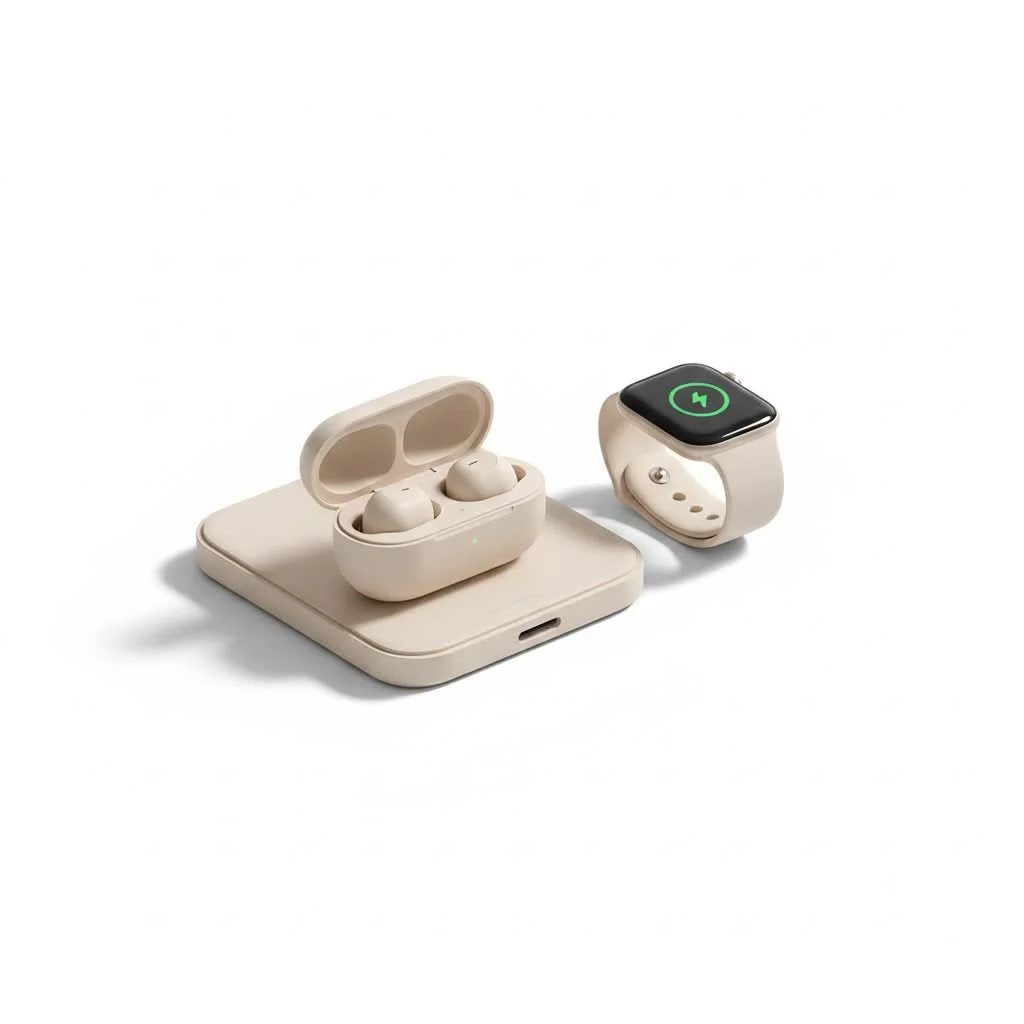
- Multi-Device Chargers: Many chargers can simultaneously power your iPhone, Apple Watch, and AirPods, helping to reduce clutter.
Brand Reputation and Certifications
Always choose reputable brands known for quality and safety. Look for certifications like Qi certification (indicated by the Qi logo) and MFi (Made For iPhone) certification, especially for MagSafe products. These ensure the charger meets industry standards and works safely and effectively with your iPhone. As Dr. Anya Sharma, Lead Engineer at rbxyz.com, states, “Never compromise on safety for a few dollars. Certified chargers protect your device and your peace of mind.”
Additional Features: Multi-Device Charging, Cooling Systems
Some premium iPhone wireless charger options offer enhanced features:
- Cooling Systems: Overheating can slow charging and affect battery health. Chargers with built-in fans or advanced heat dissipation keep your iPhone cool.
- Adjustable Angles: Stands with adjustable angles offer greater flexibility for viewing.
- LED Indicators: While helpful, some can be too bright for a bedside table. Look for dimmable or subtle indicators.
Maximizing Your iPhone’s Wireless Charging Experience & Battery Health
To ensure your iPhone wireless charger works efficiently and your iPhone’s battery remains healthy, follow these tips:
Placement is Key: Perfect Alignment Matters
For standard Qi chargers, center your iPhone on the charging pad. Even slight misalignment can lead to slower charging or no charge. With MagSafe, magnets ensure perfect alignment every time.
Ditch the Thick Cases (Sometimes)
While many phone cases are wireless charging compatible, very thick cases (especially those with metal elements, magnets, or pop sockets) can interfere. If you notice slow charging or intermittent connections, try removing your case.
Keep it Cool: Avoiding Overheating
Wireless charging generates some heat, which is normal. However, excessive heat can degrade your iPhone’s battery over time.
- Charge in a cool environment, away from direct sunlight.
- Avoid placing your phone on soft surfaces (like blankets) that can trap heat.
- Do not use your iPhone for intensive tasks (like gaming or video streaming) while it’s wirelessly charging, as this adds to the heat burden.
The Right Power Adapter Makes a Difference
Your wall adapter is as important as the charger itself. Always use a power adapter that supplies sufficient wattage for your iPhone wireless charger. For 7.5W Qi charging, a 10-12W USB-A adapter works. For 15W MagSafe, a 20W or higher USB-C power adapter is essential. Underpowering your charger will result in slower charging.
Understand Optimized Battery Charging
Your iPhone features “Optimized Battery Charging” (found in Settings > Battery > Battery Health & Charging). When enabled, your iPhone learns your daily charging routine and may pause charging past 80% until closer to when you typically need it, reducing battery wear. This is particularly useful for overnight wireless charging.
Troubleshooting Common iPhone Wireless Charger Issues
If you encounter issues with your iPhone wireless charger, here’s how to troubleshoot common problems:
- Not Charging At All:
- Check power: Ensure the charger is plugged into a live outlet and its power adapter is securely connected.
- Restart iPhone: A simple restart can often resolve minor software glitches.
- Re-align: Remove and re-place your iPhone on the charger, ensuring perfect alignment.
- Remove case: Temporarily remove your phone case to rule out interference.
- Foreign objects: Check for any metal objects (keys, cards, coins) between your iPhone and the charger, as these can block charging.
- Slow Charging:
- Check power adapter: Is it delivering enough power? A 5W adapter won’t provide fast charging.
- Alignment: Re-align your phone carefully.
- Heat: If your phone is hot, it might be intentionally slowing down charging to protect the battery. Allow it to cool down.
- Background apps: Close power-hungry apps running in the background.
- Getting Hot (Excessively):
- Some warmth is normal, but if it’s uncomfortably hot, discontinue use.
- Ensure good ventilation.
- Remove any thick cases.
- Consider a charger with better heat management.
The Future of iPhone Wireless Chargers
The evolution of the iPhone wireless charger continues with exciting developments. We anticipate longer-range wireless charging, even faster charging speeds, and more sophisticated multi-device solutions. As technology advances, these convenient devices will become even more integrated into our daily lives, making power cables an increasingly distant memory.
Frequently Asked Questions (FAQ) About iPhone Wireless Chargers
Do all iPhones have wireless charging?
No, not all iPhones have wireless charging. Only iPhone 8 models and newer (including the iPhone X, XR, XS, iPhone 11, 12, 13, 14, and 15 series, and SE 2nd/3rd gen) come with built-in Qi wireless charging capabilities.
Is wireless charging bad for iPhone battery health?
Generally, no, wireless charging is not inherently bad for iPhone battery health. Modern iPhones and chargers have safety features to prevent damage. However, excessive heat is the primary concern; charging in a cool environment and avoiding heavy usage while charging helps maintain battery health over time.
Can I use any Qi charger for my iPhone?
Yes, any Qi-certified wireless charger should work with a compatible iPhone (iPhone 8 or newer). However, a standard Qi charger will deliver a maximum of 7.5W to your iPhone, even if the charger itself is rated for higher wattages. For 15W charging, you’ll need a MagSafe-certified charger and a compatible iPhone (iPhone 12 or newer).
What’s the best wattage for an iPhone wireless charger?
For optimal speed, if you have an iPhone 12 or newer, a 15W MagSafe-certified iPhone wireless charger is best. For older Qi-compatible iPhones (iPhone 8 to iPhone 11 series, SE 2nd/3rd gen), a 7.5W Qi charger is sufficient, as they cannot utilize higher wireless charging speeds.
Why is my iPhone charging slowly wirelessly?
Slow wireless charging can be due to several factors: poor alignment, a thick phone case, an underpowered wall adapter, your iPhone getting too hot, or running demanding apps. Ensuring proper placement and using a sufficient power adapter are common solutions.
What is MagSafe and do I need it?
MagSafe is Apple’s magnetic wireless charging technology for iPhone 12 and newer models. It ensures perfect alignment and delivers faster charging speeds up to 15W. While not strictly
Get our weekly buyer guide
Practical specs, not advice. Unsubscribe anytime.
I finally upgraded to a MagSafe charger for my iPhone 13 Pro, and it’s a game-changer! The magnetic alignment is so satisfying, and I love not having to fiddle with cables anymore. It charges super fast, just like it said it would. Definitely worth the investment for the convenience.
I was a bit skeptical about wireless charging, but after getting an iPhone 12, I decided to try it. The convenience of just dropping my phone on the pad is amazing. No more fumbling for cords in the dark! It’s been super reliable and I haven’t had any issues with it not charging.
I’ve been using a standard Qi wireless charger for my iPhone XR for a while now, and it works great. It’s so nice to just set my phone down on my nightstand and know it’s charging. My only minor complaint is that sometimes I have to adjust the phone a bit to find the sweet spot, but once it’s there, it’s solid.
I picked up a new wireless charger hoping to get the full 15W charging speed for my iPhone 14, but it seems like I’m only getting about 7.5W. I double-checked that my phone supports it, so I’m a bit disappointed. It still charges, just not as quickly as I expected. Maybe I need to try a different brand.