Phone wireless chargers utilize electromagnetic induction to power devices without cables, offering convenience, reduced clutter, and multi-device charging capabilities. This technology, standardized by Qi and the newer Qi2, allows compatible smartphones to charge by simply placing them on a charging pad, with Qi2 enabling magnetic alignment for improved efficiency and speeds up to 15W across both iPhone and Android devices.

How Does a Phone Wireless Charger Actually Work?
At its core, phone wireless charging relies on a fascinating principle known as electromagnetic induction. This isn’t new science; it’s been quietly powering things like electric toothbrushes for years. But how does it transfer energy without a physical connection?
The Magic of Coils and Magnetic Fields
Inside your wireless charging pad (the transmitter) is a copper coil. When you plug the pad into a power source, an electric current flows through this coil, creating an oscillating magnetic field. Now, here’s where your phone comes in: compatible smartphones have a similar, smaller receiver coil built into their backs. When you place your phone on the charging pad, its receiver coil enters this magnetic field. This interaction induces an electric current in your phone’s coil, which is then converted into direct current (DC) power to charge your phone’s battery. Pretty neat, right?
Understanding the Key Standards: Qi and Qi2
For wireless charging to work universally, there needs to be a standard, and that’s where Qi (pronounced “Chee”) comes in. Developed by the Wireless Power Consortium (WPC), Qi is the most widely adopted standard, ensuring that a Qi-compatible phone can charge on any Qi-certified pad, regardless of brand. Most modern iPhones and Android devices support Qi wireless charging.
But the world of wireless charging is always evolving! Enter Qi2, the latest iteration of the Qi standard. What’s the big deal? Qi2 incorporates a “Magnetic Power Profile” inspired by Apple’s MagSafe technology. This means chargers and devices can magnetically align perfectly, leading to improved efficiency, faster charging speeds (up to 15W across compatible devices), and enhanced safety. While MagSafe has been exclusive to iPhones (iPhone 12 and later), Qi2 is bringing this magnetic convenience and efficiency to a broader range of Android phones, with many expected to adopt it by mid to late 2024. This essentially “future-proofs” your accessories, offering a universal solution for both iPhone and Android users.
Why Should You Switch to a Phone Wireless Charger? Unpacking the Benefits
It’s more than just a cool party trick; wireless charging offers tangible advantages that can simplify your daily tech routine.
1. Unmatched Convenience
|
Our Picks for the Best Wireless Charger in 2026
As an Amazon Associate I earn from qualifying purchases.
|
||
| Num | Product | Action |
|---|---|---|
| 1 | [Apple MFi Certified]Magnetic Wireless Charger Apple Mag Safe Charger,15W 6FT Fast Wireless Charging Pad for Apple iPhone 16 Pro Max/16 Pro/16 Plus/15 Pro Max/14/13/12/AirPods3/2/Pro/Pro2,Charging Pad |
![Check [Apple MFi Certified]Magnetic Wireless Charger Apple Mag Safe Charger,15W 6FT Fast Wireless Charging Pad for Apple iPhone 16 Pro Max/16 Pro/16 Plus/15 Pro Max/14/13/12/AirPods3/2/Pro/Pro2,Charging Pad on Amazon](https://rbxyz.com/wp-content/plugins/amazon-tables/assets/images/buy.png)
|
| 2 | LỖI |
|
| 3 | [Apple MFi Certified]Magnetic Wireless iPhone Charger Magsafe Charger,6FT 15W Fast Phone Charging Pad Wireless Magnetic Charge for iPhone 17/17Air/16 Pro Max/16 Plus/15 Pro Max/14/13/12/AirPods3/2/Pro |
|
| 4 | Samsung 15W Wireless Charger Single, Cordless Super Fast Charging Pad for Galaxy Phones and Devices, Compact Design, LED Indicator, USB C Cable Included, 2022, US Version, Grey |
|
| 5 | Magnetic Wireless Charger 15W Mag Safe Charger-Fast Charging Pad Compatible with iPhone17/16/15/14/13/12 Series & Airpods 2 3 Pro-LED Mag-Safe Pad with Dual Charging Ports Original Replacement(White) |
|
| 6 | Magnetic Wireless Charger 15W Fast Mag Safe Charger for Cell iPhone 17 Pro Max/17 Pro/17 Air/17/16/15/14/13/12 Series 2 Pack Charging Pad for AirPods 3/2/Pro 2/Pro Mag-Safe Original Replacement |
|
| 7 | INIU Wireless Charger, 15W Fast Qi Certified Wireless Charging Station with Sleep-Friendly Adaptive Light Compatible with iPhone 17 16 15 14 13 12 Pro Max Samsung Galaxy S25 S24 S23 Note 20 Google etc |
|
| 8 | NeverFall Car Phone Holder for MagSafe [78+LBS Ultra Grip - 2400gf Magnetic Power] 360° Foldable Car Mount Cell Phone Holders for Your Car for iPhone 17-12 and All Smartphones, Carbon Fiber |
|
| 9 | Amazon Basics 15W Qi Certified Wireless Charging Pad for iPhone 16/15/14/13/12/11/X, Samsung and More, with USB Cable, Black |
|
| 10 | Wireless Charger Samsung Fast Charging Pad for Samsung Galaxy S25 Ultra/S24 FE/S23 Ultra/S22/S21/Z Flip 6 5,15W Wireless Charging Station Charger Mat and QC Adapter for Google Pixel 9 8a 7a 8 7 Pro |
|
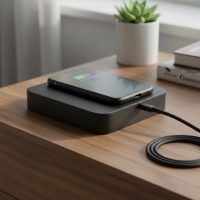
Just place and charge! That’s the beauty of it. No more fumbling for cables in the dark or trying to orient a connector correctly. Imagine dropping your phone onto a sleek pad on your desk or nightstand, and seeing it instantly start charging. It’s truly effortless.
2. Reduced Cable Clutter and Port Wear
Let’s be honest, cables can be a mess. Wireless chargers help declutter your space, offering a minimalist aesthetic. Beyond aesthetics, constantly plugging and unplugging cables can lead to wear and tear on your phone’s charging port over time. Wireless charging bypasses this, potentially extending the lifespan of your device’s port.
3. Multi-Device Charging Capabilities
Many wireless chargers aren’t just for your phone. You’ll find models designed to simultaneously charge your smartphone, smartwatch, and wireless earbuds, all from a single pad. This consolidated charging keeps all your essential gadgets powered up and ready to go.
4. Enhanced Durability and Safety Features
With fewer physical connections, there’s less risk of damaging charging cables or phone ports. Modern wireless chargers, especially those adhering to Qi standards, include built-in safety mechanisms to prevent overcharging and overheating, signaling your phone when the battery is full.
5. Charging Through Cases
Good news for those who love their phone cases! Most wireless chargers can power your device right through non-metallic cases up to 3-4mm thick. This means you typically won’t need to remove your case every time you want to charge wirelessly.
Exploring Different Types of Phone Wireless Chargers
Just like wired chargers, wireless options come in various forms to suit different needs and preferences.
What are the main types of wireless chargers available today?
You’ll typically find wireless charging pads, stands, and multi-device stations. Pads offer a flat surface, great for minimalistic setups. Stands prop your phone up, perfect for using it while charging (e.g., video calls, watching content). Multi-device stations combine these, allowing you to charge your phone, smartwatch, and earbuds simultaneously.
1. Charging Pads
These are the simplest and often most affordable wireless chargers. Your phone lies flat on the pad to charge. They are discreet and can blend seamlessly into any desk or nightstand setup.
2. Charging Stands
A wireless charging stand holds your phone upright, usually at an ergonomic angle. This is incredibly convenient for checking notifications, making video calls, or using facial recognition while your phone powers up. Many stands support both portrait and landscape charging.
3. Multi-Device Chargers
For the gadget enthusiast, multi-device chargers are a lifesaver. These stations are designed to charge your phone, smartwatch, and wireless earbuds all at once, drastically reducing cable clutter on your bedside table or desk. Look for 3-in-1 options for maximum efficiency.
4. Magnetic Wireless Chargers (MagSafe & Qi2)
As mentioned earlier, magnetic chargers provide perfect alignment for optimized charging. Apple’s MagSafe chargers snap precisely onto iPhone 12 and newer models. With the advent of Qi2, magnetic alignment is becoming a universal feature for a wider range of smartphones, promising improved charging efficiency and speeds for both Android and iPhone devices.
Choosing the Right Phone Wireless Charger for You
With so many options, how do you pick the best one? Consider these factors:
What should I look for when buying a phone wireless charger?
When choosing a wireless charger, prioritize compatibility (Qi, MagSafe, Qi2), charging speed (wattage), design, and any extra features like multi-device charging or portability.
- Compatibility: Ensure your phone supports wireless charging (most modern smartphones do) and check for Qi, MagSafe, or Qi2 compatibility based on your device. If you have an iPhone 12 or newer, MagSafe compatibility is a great bonus. For future-proofing, Qi2 is the way to go.
- Charging Speed (Wattage): Wireless chargers come with different power outputs (e.g., 5W, 7.5W, 10W, 15W, and even faster proprietary standards like OnePlus’s 50W Warp Charge). Higher wattage generally means faster charging. Check what your phone supports for optimal speed. Keep in mind that iPhones typically charge wirelessly at up to 7.5W on standard Qi chargers, but up to 15W with MagSafe or Qi2.
- Design & Form Factor: Do you prefer a flat pad that disappears into your desk, a stand that keeps your phone visible, or a multi-device hub? Consider where you’ll be using it most.
- Portability: If you travel frequently, a compact, lightweight charger like the Benks On-Go 3-in-1 can be invaluable.
- Brand Reputation: Stick with reputable brands like Anker, Belkin, Samsung, and Native Union for reliability and safety.
- Price: Wireless chargers range from budget-friendly pads to premium multi-device stations. Determine your needs and budget.
Expert Insight on Wireless Charging Evolution
“The continuous innovation in wireless charging, particularly with the widespread adoption of Qi2, is a monumental step towards a truly seamless mobile experience,” says Dr. Evelyn Reed, a lead engineer specializing in wireless power solutions. “This not only brings enhanced speed and efficiency but also promises a new era of universally compatible magnetic accessories for both iPhone and Android users, making charging simpler and more intuitive than ever before.”
Frequently Asked Questions About Phone Wireless Chargers
Q1: Is wireless charging slower than wired charging?
A1: While early wireless chargers were generally slower, modern advancements, especially with standards like Qi2 and MagSafe, have significantly closed the gap. Many new wireless chargers offer up to 15W charging, comparable to many wired chargers. Some proprietary wireless charging solutions can even exceed this, offering extremely fast speeds.
Q2: Does wireless charging damage my phone’s battery?
A2: No, properly certified wireless chargers are designed with safety features to prevent overcharging and excessive heat, which can degrade battery health. The Qi standard includes communication protocols between the charger and device to regulate power levels and ensure safe charging. However, extreme heat from non-certified or poorly designed chargers could potentially affect battery lifespan over a very long period.
Q3: Can I use a phone case with a wireless charger?
A3: Yes, most wireless chargers work perfectly through standard non-metallic phone cases up to about 3-4mm thick. However, very thick cases or cases with metal components, magnets (unless for MagSafe/Qi2), or credit cards stored in them can interfere with charging efficiency or prevent charging altogether.
Q4: What is Qi2 and how is it different from Qi?
A4: Qi2 is the next generation of the Qi wireless charging standard. The main difference is its “Magnetic Power Profile,” which is based on Apple’s MagSafe technology. This magnetic alignment ensures better efficiency and faster charging speeds (up to 15W) compared to standard Qi, and it’s being adopted by both iPhones and Android devices.
Q5: Do I need a special adapter for a wireless charger?
A5: Most wireless chargers come with a USB cable, but some might not include a power adapter (the wall brick). It’s crucial to use a power adapter that can supply enough wattage to match your wireless charger’s output to achieve optimal charging speeds. Look for adapters that support Quick Charge (QC) or USB Power Delivery (USB-PD).
Embrace the Wireless Revolution
Phone wireless chargers are more than a luxury; they’re a smart upgrade for anyone seeking convenience, a tidier space, and peace of mind. From the simple electromagnetic induction that powers them to the innovative Qi2 standard making magnetic charging universal, this technology is constantly evolving to make our digital lives easier. So go ahead, untangle your tech, and confidently step into the future of charging. Your phone (and your sanity) will thank you for it!
Choosing the Right Phone Wireless Charger
Select the best wireless charger by considering compatibility, charging speed, design, and additional features to match your device and lifestyle needs.
Ensure your smartphone supports wireless charging and is compatible with Qi, MagSafe, or Qi2 standards. iPhones 12 and newer benefit from MagSafe, while Qi2 offers future-proof magnetic alignment for both iPhone and Android.
Identify the wattage your phone supports for optimal wireless charging (e.g., 7.5W for iPhones on standard Qi, 15W for MagSafe/Qi2). Higher wattage generally means faster charging, with some proprietary solutions offering even quicker speeds.
Choose between a flat charging pad for a discreet setup, a charging stand for visibility and usability, or a multi-device charger for simultaneous charging of multiple gadgets. Think about where you will primarily use the charger.
If you travel frequently, opt for a compact and lightweight charger. For reliability and safety, stick with reputable brands like Anker, Belkin, Samsung, and Native Union, which are known for quality products.
Get our weekly buyer guide
Practical specs, not advice. Unsubscribe anytime.
I always thought wireless charging was some kind of magic, but the explanation about the copper coils and magnetic fields made so much sense! I finally took the plunge and bought a wireless charger for my desk. It’s so convenient to just set my phone down and have it charge without thinking about it. Definitely reduces clutter.
I appreciate the breakdown of how electromagnetic induction works, it was pretty clear. I bought one of the chargers mentioned, and while it works fine for my phone, I wish it had a stronger magnetic hold. My phone sometimes shifts a little if I bump the table, and then it stops charging. It’s a minor annoyance, but something to consider.
I was so tired of dealing with tangled cords on my nightstand. This post really helped me understand how the Qi2 standard works and why it’s better. I ended up getting a multi-device charger that supports Qi2, and it’s been a game-changer for my iPhone and AirPods. No more fumbling in the dark for cables!
I’ve been using a basic Qi charger for a while, but the explanation of magnetic alignment for improved efficiency really caught my eye. I upgraded to a new pad that uses the Qi2 standard, and I can definitely tell the difference in charging speed, especially with my Android phone. It’s great to finally get that 15W without a cable.